魅力スポット_五島の倭寇に関すること
令和7年度「地域観光資源の多言語解説整備支援事業」に採択されました。
採択された多言語化の内容を掲載します。
五島の倭寇、王直、明人堂、六角井、山崎の石塁
五島列島は中世、中国・朝鮮沿岸を荒らした「倭寇」の主要な根拠地であり、特に14〜15世紀の「前期倭寇」では平戸・対馬などと共に活動の拠点として機能しました。また、後期には王直などの明人倭寇が五島氏と通商し、小手ノ浦(上五島)や福江に拠点(明人堂など)を構えました。倭寇にまつわる解説をします。
・明人堂 〒853-0007 長崎県五島市福江町19
・六角井 〒853-0006 長崎県五島市江川町5
・山崎石塁(勘次ヶ城)
〒853-0213 長崎県五島市富江町岳
五島の倭寇
10世紀の変わり目に中国唐王朝が衰退すると、東シナ海における商取引が活発化した。この海域は13世紀から16世紀にかけて特に盛んな交易地帯となり、五島列島は現在の中国・朝鮮半島・台湾・日本を結ぶ海路網の中心地となった。
この豊かな交易は海賊を惹きつけた。特に1371年、新たに成立した明王朝が海上交易の政府独占を布告すると、その傾向は顕著となった。倭寇(「日本の海賊」)と呼ばれる者たちは、朝鮮半島や中国沿岸の集落を襲撃した。これらの海賊は東アジア全域から集結し、しばしば日本の戦国大名と結託していた。大名たちは、住民が応じれば交易に、拒めば略奪に海賊を送り込んだのである。
五島列島を拠点とする商人・海賊集団は、朝鮮半島や中国沿岸で交易と略奪を行い、日本本土でも商売を展開し、かなりの利益と一定の政治的独立性を蓄積した者もいた。1540年以降、福江島は有名な中国人の密輸業者兼海賊頭目である王直(1560年没)が利用した数多くの拠点の一つとなった。彼の中国・日本ネットワークは1550年代に実質的に東シナ海を支配していた。
福江島には倭寇に関連する遺跡が複数残る。島の南端・山﨑の僻地では密輸拠点の石造基礎が発掘された。福江地区では中国様式の明人堂が王直の旧居跡を示し、王直時代の中国式六角井戸も戸岐町と合わせて二基保存されている。
The Wako of Goto
When the Chinese Tang dynasty fell into decline at the turn of the tenth century, merchant exchange picked up pace in the East China Sea. This expanse of water was a particularly active trade zone from the thirteenth to sixteenth century, with the Goto Islands at the center of a network of sea routes connecting what are now China, Korea, Taiwan, and Japan.
This wealth of trade attracted piracy, especially after 1371, when the newly established Ming dynasty imposed a government monopoly on maritime exchange. Marauders called wako (“Japanese pirates”), who hailed from throughout East Asia, began raiding settlements along the Korean and Chinese coasts. These pirates were often in league with Japanese warlords, who sent the seafarers to engage in trade if the residents were willing, and piracy if they refused.
Groups of merchants and pirates based in the Goto Islands traded and raided along the Korean and Chinese coasts while conducting business in mainland Japan. Some amassed great wealth and a degree of political autonomy. From 1540, Fukue Island became one of the many bases used by Wang Zhi (d. 1560), a notorious Chinese smuggler and pirate chief whose Sino–Japanese network essentially ruled the East China Sea during the 1550s.
Several sites associated with the wako remain on Fukue Island. The stone foundations of a smuggling outpost have been unearthed in Yamazaki, on the remote southern end of the island. In the town of Fukue, the Chinese-style Minjindo Hall marks the site of Wang Zhi’s former settlement, and two Chinese-style hexagonal wells from Wang’s time have been preserved in the Egawamachi and Togicho neighborhoods.
王直
1540年のある日、五島藩主のもとに海を越えた予期せぬ訪問者が訪れた。中国船団が福江港に入港したことは異例の出来事であった。1371年以来、中国による海上貿易は統治する明王朝によって禁止されていたからだ。船団の指導者である王直(1560年没)は、大名・宇久盛定に五島列島との通商関係を請願した。領内の低迷する経済を活性化させたいと考えた盛定はこれを承諾し、王直の乗組員を宇久家の拠点である江川城の東側の丘に定住させるよう招いた。1500年代半ばの日本は政情不安と内紛の時代であり、実効的な中央権力が存在しなかったため、地方大名たちはほぼ自由に海外貿易を行えた。
王直が五島に到着した時点で、彼は既に確立された密輸業者であった。寧波沖の島港・双嶼を拠点に、朝鮮半島から東南アジアのポルトガル植民地まで広がる貿易網を築いていた。福江に新たな拠点を構えた彼は、このネットワークを広げる形をとった。1542年には平戸(現在の長崎近郊)にもその手を伸ばした。福江と同様、平戸でも王直は地元大名の後援を得て、ポルトガル人だけでなく東アジア各地から集まる密輸業者や海賊とも取引を行った。
王直の富と影響力は1540年代から1550年代にかけて拡大し、南日本の諸大名との関係を確立した。彼は間もなく日本と中国間の極めて大きな利益をもたらす密貿易の大半を掌握し、朝鮮から中国南部までの沿岸都市を襲撃する汎東アジア的な海賊ネットワークを指揮した。王直の活動は明政府にとって頭痛の種となり、明は使者を日本へ派遣し、沿岸の大名に海賊の取り締まりを要請した。1555年、明の使者は五島列島で王直と会談した。王直は海賊を統制する代わりに、政府が貿易のために港を開くよう要求した。両者の交渉は1559年まで続いたが、王直は情勢が有利に動いていると確信し、最終合意のため杭州へ向かった。しかし間もなく投獄され、1560年1月に処刑された。
王直の遺業は福江地区に今なお息づいている。かつての中国人居住地は今も「唐人町」と呼ばれ、王直が祈りを捧げたと伝えられる神社跡には中国風の明人堂が再建され、王直の時代に造られた中国式の六角井戸が二基保存されている。
Wang Zhi
One day in 1540, the daimyo lord of Goto received unexpected visitors from across the sea. The arrival of a fleet of Chinese junks in Fukue Harbor was a remarkable event, as maritime trade by Chinese subjects had been prohibited by the ruling Ming dynasty since 1371. The fleet’s leader, Wang Zhi (d. 1560), petitioned daimyo Uku Morisada for trade relations with the Goto Islands. Eager to revive his domain’s struggling economy, Morisada consented and invited Wang’s crew to settle on a hill just east of Egawa Castle, the Uku family’s stronghold. The mid-1500s were a time of political instability and internal conflict in Japan, and the lack of an effective central authority allowed local daimyo to pursue foreign trade largely at their own discretion.
Upon his arrival in Goto, Wang Zhi was already a seasoned maritime trader and smuggler. Based out of Shuangyu, an island port off the coast of Ningbo, he had established a trading network that stretched from the Korean Peninsula to the Portuguese colonies in Southeast Asia. His new base in Fukue became yet another node in this web, which in 1542 he extended to Hirado (near today’s Nagasaki). As in Goto, Wang enjoyed the patronage of the local daimyo lord in Hirado, where he traded with the Portuguese as well as other smugglers and pirates from throughout East Asia.
Wang Zhi’s wealth and influence grew throughout the 1540s and 1550s, when he forged alliances with daimyo across southern Japan. He soon controlled most of the lucrative illicit trade between Japan and China, and commanded a pan–East Asian network of pirates that raided coastal cities from Korea to southern China. Wang’s operations alarmed the Ming government, which dispatched envoys to Japan urging the coastal daimyo to suppress piracy. In 1555, the Ming envoys met with Wang Zhi in the Goto Islands. Wang proposed to curb pirate activity in return for the reopening of China’s ports to trade. Negotiations between the two sides continued until 1559, when Wang, confident that things were going his way, sailed to the city of Hangzhou to finalize his deal. He was soon imprisoned, however, and was executed in January 1560.
Wang Zhi’s legacy endures in the town of Fukue, where the site of the former Chinese settlement is still called Tojinmachi (“town of Chinese people”). The Chinese-style Minjindo Hall has been reconstructed on the site of a shrine where Wang is said to have prayed, and two Chinese-style hexagonal wells from his time have been preserved.
明人堂
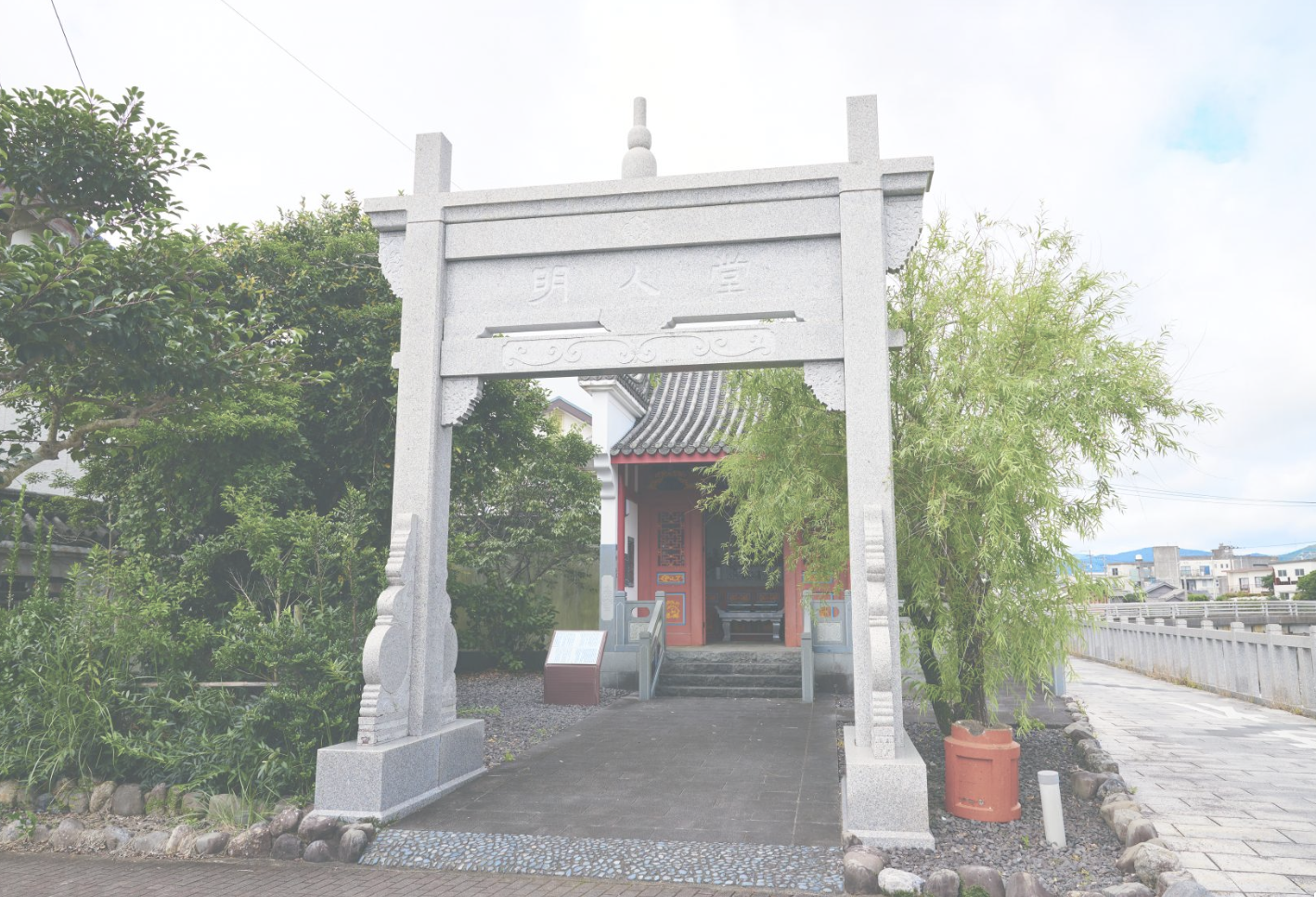
明人堂は福江の町にある中国様式の寺院で、16世紀の中国人の祈りの場があったとされる場所に建てられた。その周辺は「唐人町」として知られている。名称は1540年に遡る。この年、有名な密輸業者兼海賊の王直(1560年没)が福江港に船を寄せ、五島藩主・宇久家との交易関係を築いた。宇久家は王直の船員たちを、居城の東側、福江川の対岸にある丘に定住させるよう招いた。彼らの集落は倉庫、中国式の六角井戸、商人が海の安全を祈願する神社を備えた繁栄した交易拠点へと発展した。
福江上陸後数十年で、王直は日本と中国間の密貿易を掌握し、朝鮮から中国南部までの沿岸都市を襲撃する東アジア全域の海賊ネットワークを指揮した。しかし1560年、中国政府に海賊行為で捕らえられ処刑された。福江の唐人町は彼の没落後に衰退したと考えられるが、その記憶は今に伝わっている。
明人堂は1999年、地元住民の寄付により建立された。屋根瓦や壁画は中国職人による作で、礎石は中国から輸入された。堂内の図解地図には1540年代の集落が再現されており、福江沖に停泊する貿易船と、宇久氏の城を挟んで対岸の唐人町へ向かう小舟が描かれている。
Minjindo Hall
Minjindo Hall is a Chinese-style temple in the town of Fukue, built on what is thought to be the site of a sixteenth-century Chinese place of worship. The surrounding area is known as Tojinmachi (“town of Chinese people”), a name that dates back to 1540. In that year, the notorious smuggler and pirate Wang Zhi (d. 1560) sailed into Fukue Harbor proposing to establish trade relations with the Uku family, the lords of Goto. The Uku invited Wang’s crew to settle on a hill to the east of their castle, on the opposite side of the Fukue River. Their encampment grew into a thriving trading post with storehouses, Chinese-style hexagonal wells, and a shrine where residents prayed for safe voyages at sea.
In the decades after his arrival in Fukue, Wang Zhi took control of the highly lucrative illicit trade between Japan and China, and commanded a pan–East Asian network of pirates that raided cities along the coast from Korea to southern China. However, he was captured by the Chinese government and executed for piracy in 1560. The Chinese settlement in Fukue is thought to have declined soon after his demise, but its memory has endured.
Minjindo Hall was built in 1999 with donations from local residents. Its roof tiles and murals were crafted by Chinese artisans, and the foundation stones were imported from China. Inside, an illustrated map offers an artist’s impression of the settlement in the 1540s, depicting a Chinese trading ship anchored off Fukue and smaller boats ascending the river toward Tojinmachi, across from the Uku family castle.
六角井
福江島の江川町と戸岐町に所在する六角形の井戸二基は、16世紀に福江の城下町の東側に現れた中国人の集落が遺した唯一の物理的痕跡である。これらの井戸は1540年以降、五島藩主が密輸業者兼海賊の王直(1560年没)に福江への拠点設立を許した後に中国人商人によって掘られた。この集落は倉庫や住居、住民が航海の安全を祈願した神社を備えた繁栄した交易拠点へと発展した。
六角形の井戸からは、陸と船の両方で使用される生活用水が得られた。このような井戸は、16世紀に中国との貿易や中国人による貿易が盛んだった東アジア・東南アジアの港湾都市、北は長崎・平戸から南は香港に至るまで保存されている。なお、なぜこの形の井戸が造られたのかは不明。
Hexagonal Wells
Two six-sided wells in the Egawamachi and Togicho neighborhoods on Fukue Island are the only physical traces of the Chinese settlement that in the sixteenth century developed just east of the castle town of Fukue. The wells were dug by Chinese merchants after 1540, when the daimyo lord of Goto allowed the prominent smuggler and pirate Wang Zhi (d. 1560) to establish an encampment there. This settlement grew into a flourishing trading post with storehouses, residences, and a shrine where residents prayed for safe voyages and protection at sea.
The hexagonal wells supplied fresh water for domestic use and seafaring expeditions. Similar wells have been preserved in ports across East and Southeast Asia where trade with China or by Chinese flourished in the sixteenth century, from Nagasaki and Hirado in the north to Hong Kong in the south. The reason for their distinctive six-sided design remains uncertain.
山崎の石塁
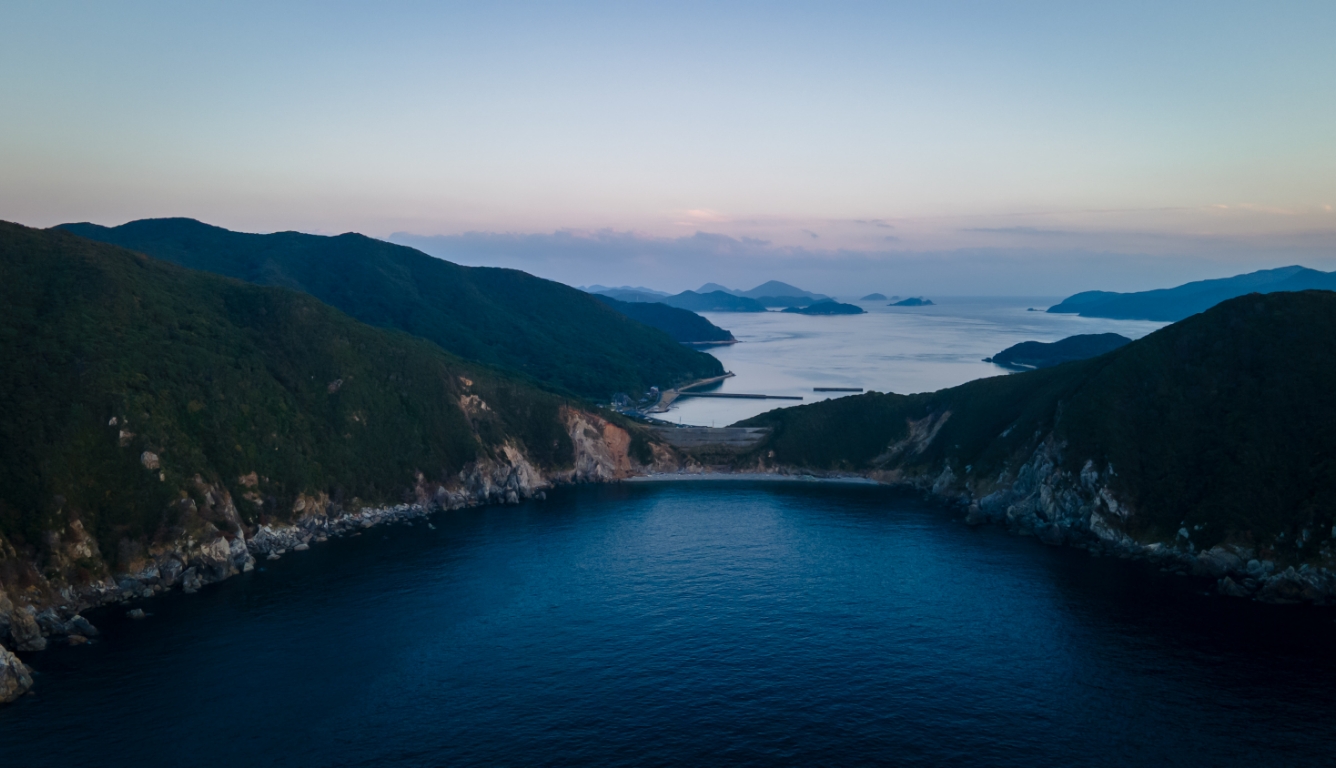
黒色の火山岩が、福江島の南端にある小さな集落・山崎の荒々しい海岸線を覆っている。1400年代か1500年代のある時期、この同じ岩石が、東シナ海の対岸の海賊と密貿易を行っていた地元の船乗りたちが利用した、沿岸の密輸拠点の基礎建設に用いられた。その基礎部分は、現在現地に建てられた小さな展望台から眺めることができる。
1400年代から1500年代にかけて、東シナ海周辺は政治的不安定と経済的苦難の時代であった。日本、朝鮮、中国の各政府が海上交易に対して厳格だがほとんど執行不可能な規制を敷く中、五島列島や南日本の多くの漁師や商人たちは、生き残るために無許可の交易に頼るようになった。総称して「倭寇」と呼ばれた彼らは、動機や手法が大きく異なる多様な集団であった。平和的な手段で交易を行う者もいれば、朝鮮半島や中国沿岸の集落を襲撃する者もいた。倭寇の中には日本の戦国大名と結託している者もいて、相手側が交易に応じれば商人として、拒否すれば海賊として活動させた。
山崎の拠点が誰によって建設・維持されたかはほとんど知られていないが、そのアクセス困難な立地から、貴重品の貯蔵庫として使用されていた可能性が示唆される。五島の多くの倭寇は絹糸や日本刀を含む武器を密輸し、それらをアジア大陸産の絹織物、書籍、美術品、貴金属と交換していたことが知られている。
Stone Foundations at Yamazaki
Black volcanic rock covers the rugged shoreline at Yamazaki, a sparsely populated village on the southern tip of Fukue Island. Sometime in the 1400s or 1500s, this rock was used to construct the foundations of a coastal outpost used by local seafarers who engaged in illicit trade with their smuggling counterparts across the East China Sea. The foundations can be seen today from a small observation tower overlooking the site.
The fifteenth and sixteenth centuries were marked by political uncertainty and economic hardship around the East China Sea. As the governments of Japan, Korea, and China maintained strict but largely unenforceable controls on maritime exchange, many fishermen and merchants in the Goto Islands and throughout southern Japan turned to unlicensed trade to survive. Collectively known as wako (“Japanese pirates”), they were a diverse group whose motives and methods varied greatly. Some engaged in trade through largely peaceful means, while others raided settlements along the Korean and Chinese coasts. Many of the wako were in league with Japanese warlords, who encouraged them to trade when welcomed and to plunder when refused.
Little is known about who built and maintained the outpost at Yamazaki, though its inaccessible location suggests that it may have been used to store valuables. Many wako in Goto are known to have traded in items such as silk thread, samurai swords, and other weapons, which they exchanged for silk textiles, books, artworks, and precious metals from mainland Asia.