魅力スポット_白鳥神社
令和7年度「地域観光資源の多言語解説整備支援事業」に採択されました。
採択された多言語化の内容を掲載します。
白鳥神社
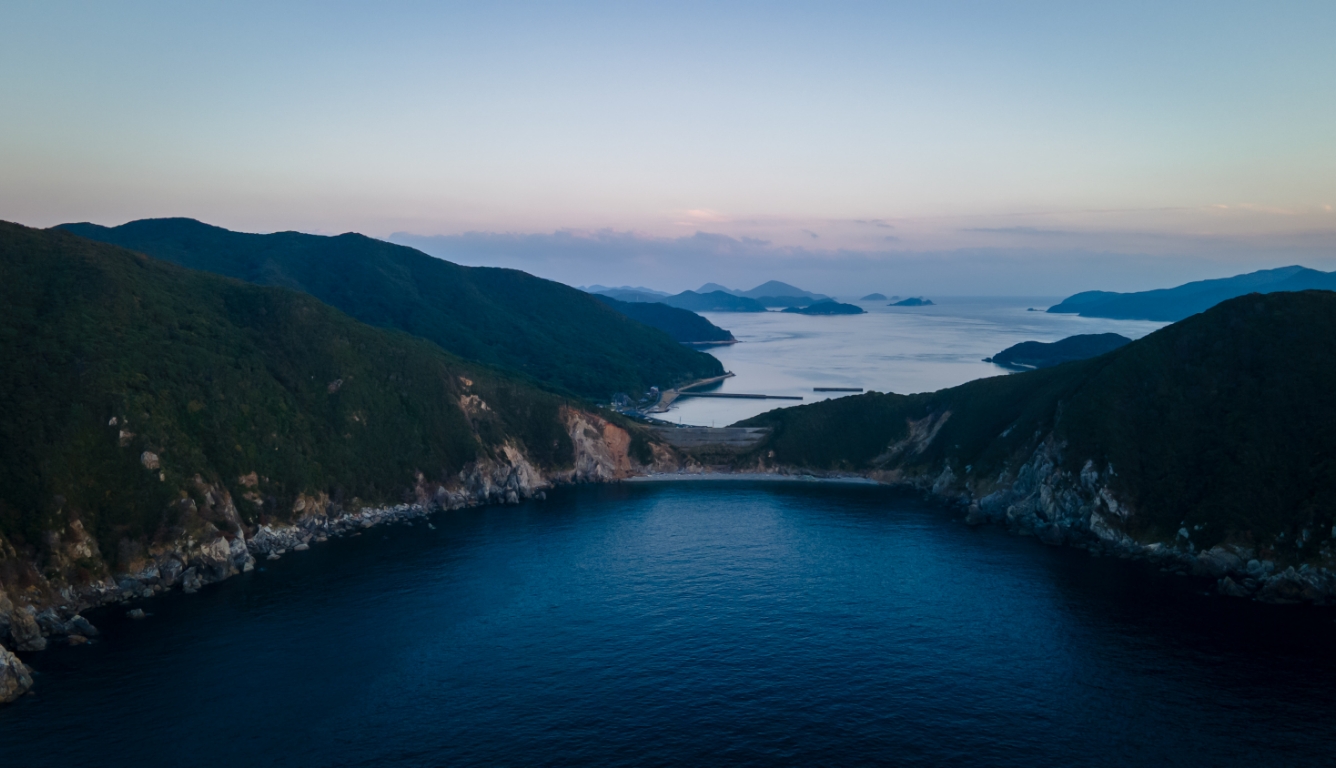
福江島の玉之浦地区にある白鳥神社について解説します。
所在地:〒853-0411 長崎県五島市玉之浦町玉之浦 1629
白鳥神社
白鳥神社は福江島の西端、玉之浦湾を見下ろす古くからの聖域である。神社は玉之浦集落とは湾を挟んだ対岸に位置し、その神は港の守護神として、また航海者の守護神として崇められている。参拝者は伝統的に湾を船で渡り、集落からも見える目立つ石造りの鳥居を目指して参拝した。現在では南側から細い道を通って陸路でも参拝できる。
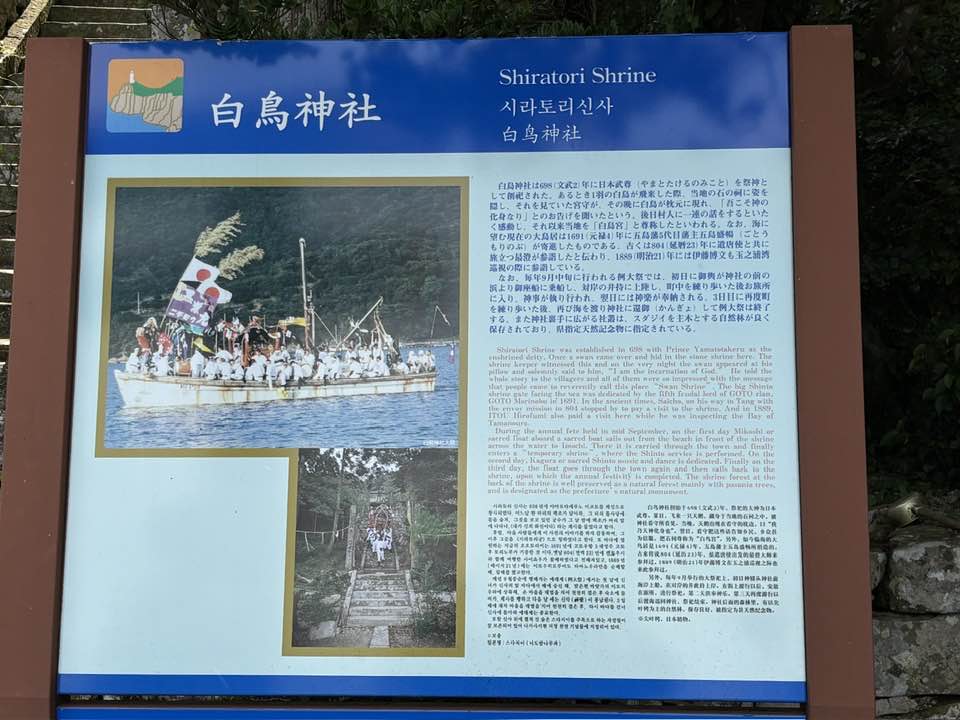
毎年9月中旬に行われる三日間のお祭りは、神輿を船に載せて湾を渡り、再び戻ってくる様子で知られている。初日は神輿が船運で井持の集落へ運ばれ、町内を巡行した後、仮の社殿に安置される。二日目の夜にはここで国指定重要無形民俗文化財の五島神楽が奉納される。最終日には神輿が再び井持を巡行し、船で白鳥神社へ戻される。
伝説によれば、白鳥神社には日本史を代表する高僧・最澄(767-822)が参拝したとされる。804年、最澄は朝廷の派遣により唐中国へ渡航。外交・商業関係の構築と、中国政府・経済・文化・宗教の研究を目的とした使節団の一員であった。中国での経験が契機となり、彼は天台宗を創立。この宗派はその後数世紀にわたり、日本の哲学・美意識、宗教思想と実践に深い影響を及ぼした。最澄は東シナ海を横断する危険な航海の最終段階に臨む前、白鳥神社で神々の加護を祈願したと伝えられている。
Shiratori Shrine
Shiratori Shrine is an ancient Shinto sanctuary overlooking Tamanoura Bay on the western end of Fukue Island. The shrine is located across the bay from the village of Tamanoura, and the enshrined deity is worshiped as a guardian of the port and a protector of seafarers. In earlier times, worshipers crossed the bay by boat to reach the shrine, steering toward its prominent stone torii gate, visible from the village. Today, the shrine is also accessible by land via a narrow road from the south.
The shrine’s annual festival in mid-September, which is celebrated over three days, is noteworthy for how the enshrined deity is ferried across Tamanoura Bay and back in a mikoshi (portable shrine) mounted on a boat. On the first day, the mikoshi is transported over the water to the village of Imochi near Tamanoura, where it is carried through the streets before being placed in a temporary shrine. Goto Kagura shrine dances, which have been designated an Important Intangible Folk Cultural Property, are performed in honor of the deity here on the evening of the second day. On the last day, the mikoshi is paraded through Imochi again and ceremonially returned to Shiratori Shrine by boat.
According to legend, Shiratori Shrine was once visited by Saicho (767–822), one of the most notable Buddhist priests in Japanese history. In 804, Saicho was part of an official mission dispatched by the Japanese court to Tang China to cultivate diplomatic and commercial ties and to study Chinese governance, economy, culture, and religion. His experience in China led him to establish the Tendai school of Buddhism, which came to exercise a profound influence on Japanese thinking and aesthetics, as well as religious thought and practice, for centuries. Saicho is said to have prayed for divine protection at Shiratori Shrine before embarking on the final leg of a perilous journey across the East China Sea.