魅力スポット_念仏踊り
令和7年度「地域観光資源の多言語解説整備支援事業」に採択されました。
採択された多言語化の内容を掲載します。

念仏踊り
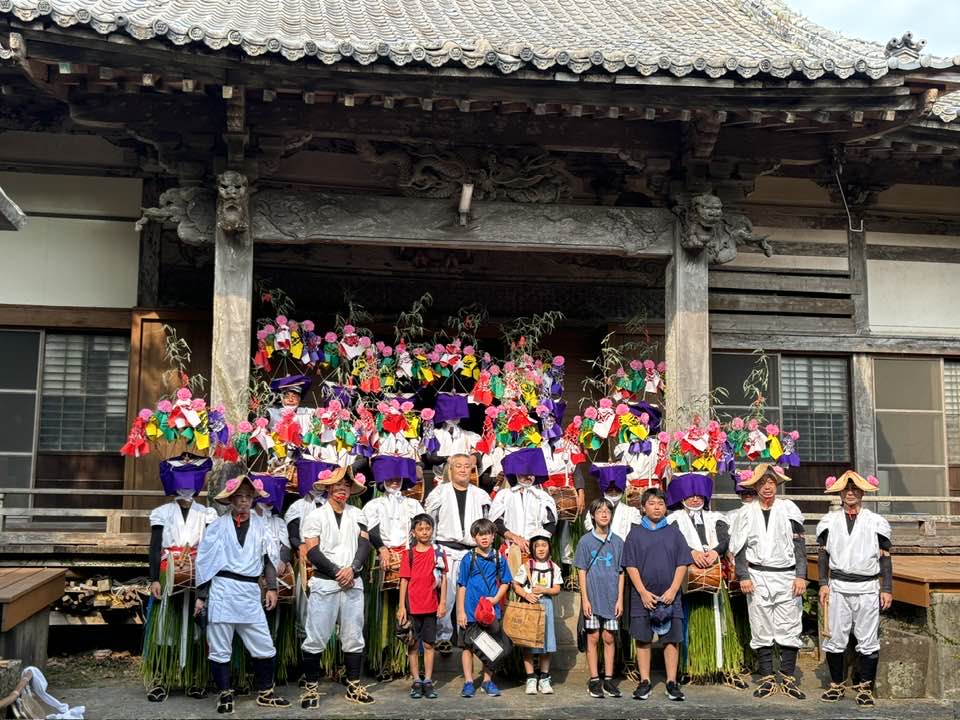
旧盆の8月13日〜15日に五島市内の各地で念仏踊りが奉納されます。地区により念仏踊りの呼び名が違います。福江地区の『チャンココ』、玉之浦地区の『カケ』、富江地区の『オネオンデ』の解説をします。
念仏踊り:チャンココ
日本各地の夏祭りでは、念仏踊りの奉納が多く見られる。これは儀式舞踊と音楽、阿弥陀仏の名号唱和を組み合わせた行事で、福江島では少なくとも12世紀以来、夏のお盆の一環として踊られてきた。お盆は家族が亡き先祖を祀る行事である。江戸時代(1603-1867)には福江城でも、五島藩主の霊を鎮めるため念仏踊りが奉納された。町ごとに衣装・歌唱様式・動作・名称が異なり、島内では十数種類の念仏踊りが奉納される。その大半は8月15日前後に執り行われる。
福江の中心部では「チャンココ」と呼ばれる。これは踊り手たちが打つ鉦や太鼓の音を表す擬音語である。8月13日から3日間、踊り手たちはそれぞれの地域で家々を巡り、初盆を迎える各家庭で演舞を披露する。その後、地元の墓地へ向かい、墓の間で踊りながら先祖の霊を弔う。舞踊者は半袖の白い襦袢と草の腰蓑を身にまとい、色とりどりの房飾りが施された白と赤の精巧な笠を装着する。伝統的に笠の装飾品は魔除けとして機能し、前年に家族の一員が亡くなった家屋に供えられていた。
念仏踊りの観覧は誰でも歓迎される。特に「チャンココ」の踊り手たちは、福江の商店街などで公衆向けに積極的に披露することもある。ただし、踊りは宗教的な性質を持つため、特に墓地や民家の近くでは、観覧する際には敬意を持って振る舞うようお願いしたい。「チャンココ」は長崎県の無形民俗文化財に指定されている。
Nenbutsu Odori : Chankoko
Many summer festivals across Japan feature groups performing the nenbutsu odori (Buddhist prayer dance), a practice that blends rhythmic movement, music, and the invocation of Amida Buddha’s name. On Fukue Island, these dances have been performed as part of the summer Obon festival, when families honor their ancestors, since at least the twelfth century. During the Edo period (1603–1867), nenbutsu odori was also performed at Fukue Castle to venerate the forebears of the daimyo lord of Goto. Individual towns have unique costumes, singing styles, movements, and names for the dance. Around a dozen distinct styles of nenbutsu odori are performed on the island, mostly around August 15.
In the central Fukue district, the dances are called chankoko, an onomatopoetic reference to the sound of the dancers’ gongs and drums. Over three days beginning on August 13, groups of dancers go from house to house in their respective neighborhoods, performing for families who have lost a loved one in the past year. They then proceed to the local cemetery, where they dance among the graves in veneration of ancestral spirits. The dancers wear short-sleeved white shirts and grass skirts, and don elaborate white and red headpieces adorned with colorful streamers. Traditionally, these ornaments served as protective charms and were left in houses in which a member of the family had passed away during the previous year.
Anyone is welcome to watch performances of nenbutsu odori. Chankoko dancers, in particular, sometimes perform explicitly for the public along shopping streets in the town of Fukue. However, spectators are careful to respect the religious nature of the dances, especially at burial sites and in the vicinity of private homes. The chankoko dances have been designated an Intangible Folk Cultural Property of Nagasaki Prefecture.
念仏踊り:カケ
毎年8月14日、夏の盆の時期に、福江島の玉之浦地区の住民たちは集まり、亡き先祖を称えるために「カケ」の踊りを披露する。「カケ」は念仏踊りの一種であり、儀式的な踊り、音楽、そして阿弥陀仏の名を唱える行為を組み合わせたものである。福江島では、町ごとに衣装、歌い方、動き、踊りの名称が異なり、島内では十数種類の念仏踊りが踊られている。
玉之浦の「カケ」は8月14日朝、地域集会所から始まる。武士が纏う鎧甲を装った薄手の白いシャツ、草の腰蓑、色とりどりの房飾り・紙の花・緑の枝で飾られた高い紫の兜を身につけた踊り手たちは、首から下げた太鼓をにぎやかに打ち鳴らしながら近くの西方寺へ行列する。寺の前で祈りを唱えながら踊りを披露した後、僧侶の加護を受け、途中で2つに分かれ、希望する約100軒の家を周り、霊魂の安らぎを祈る。最後には西方寺で合流する。
念仏踊りの観覧は誰でも歓迎される。ただし踊りは宗教的な性質を持つため、敬意を持って観覧するよう心がけてほしい。
Nenbutsu Odori : Kake
Every August 14, during the summer Obon festival, residents of the Tamanoura district on Fukue Island gather to perform the kake dance in honor of their ancestors. Kake is a form of nenbutsu odori (Buddhist prayer dance), a practice combining ritual dance, music, and the chanting of Amida Buddha’s name. On Fukue, each town has its own costumes, singing styles, movements, and names for the dance, and around a dozen different types of nenbutsu odori are performed on the island.
The kake of Tamanoura begins at the local community center in the morning of August 14. Dancers clad in thin white shirts embellished to resemble warrior attire, grass skirts, and towering purple headwear adorned with colorful streamers, paper flowers, and green branches parade to nearby Saihoji Temple while beating small drums slung around their necks. They then dance in front of the temple while chanting a prayer. After receiving a blessing from the priest, the dancers split up into two groups and go around the approximately 100 houses in the village, performing for any family that welcomes them in and praying for the souls of their ancestors. At the end of the day, the two groups are reunited at Saihoji.
Anyone is welcome to watch performances of nenbutsu odori. However, spectators should be careful to respect the religious nature of the dances.
念仏踊り:オネオンデ
日本各地の夏祭りでは、念仏踊りの奉納が多く見られる。これは儀式舞踊と音楽、阿弥陀仏の名号唱和を組み合わせた行事で、福江島では少なくとも12世紀以来、夏のお盆の一環として踊られてきた。お盆は家族が亡き先祖を祀る行事である。江戸時代(1603-1867年)には福江城でも、五島藩主の霊を鎮めるため念仏踊りが奉納された。町ごとに衣装・歌唱様式・舞踊動作・名称が異なり、島内では十数種類の念仏踊りが奉納される。大半は8月15日頃に行われる。
福江島南部の富江地区では「オネオンデ」と呼ばれ、8月14日に踊られる。この日、踊り手はそれぞれの地区の家々を巡り、各家庭で踊りを披露し、家の仏壇前で経を唱える。夕方には地域の墓地に集まり、最近亡くなった地域住民の墓前で踊りを捧げる。舞踊は主に礼拝動作、短い前後移動、素早い回転で構成される。踊り手は白い布で結んだ草の腰蓑と、鮮やかな植物や花の模様をあしらった薄手の半袖襦袢(上着)を着用する。同じ模様が頭飾りのかぶりものにも施されており、平らな頂部に布が顔まで覆うように取り付けられている。その頂部にはカラフルなクレープ紙で作られた高層の装飾品が冠されている。
念仏踊りの観覧は誰でも歓迎される。ただし、踊りが宗教的な性質を持つため、特に墓地や民家の近くでは、観覧の際は敬意を持って行動してほしい。
Nenbutsu Odori : Oneonde
Many summer festivals across Japan feature groups performing the nenbutsu odori (Buddhist prayer dance), a practice combining ritual dance, music, and the invocation of Amida Buddha’s name. On Fukue Island, these dances have been performed as part of the summer Obon festival, when families honor their ancestors, since at least the twelfth century. During the Edo period (1603–1867), nenbutsu odori was also performed at Fukue Castle to venerate the forebears of the daimyo lord of Goto. Individual towns have unique costumes, singing styles, movements, and names for the dance. Around a dozen different types of nenbutsu odori are performed across the island, most of them around August 15.
In the Tomie district of southern Fukue, the dances are called oneonde and performed on August 14. On this day, dancers move from house to house within their neighborhoods, performing for each family and chanting sutras before household altars. In the evening, they gather at the local cemetery to dance among the graves of recently deceased members of the community. The choreography consists mainly of bows, short steps forward and back, and quick turns. Oneonde dancers wear grass skirts tied with white sashes and lightweight, short-sleeved jackets adorned with bright floral and botanical motifs. The same designs decorate their headgear, a flat-topped hat draped with cloth that conceals the face, crowned with a towering ornament made from multicolored crepe paper.
Anyone is welcome to watch performances of nenbutsu odori. However, spectators are careful to respect the religious nature of the dances, especially at burial sites and in the vicinity of private homes.