魅力スポット_大円寺、五島家、大円寺公園と水神宮
観光庁の令和7年度「地域観光資源の多言語解説整備支援事業」に採択されました。
採択された多言語化の内容を掲載します。
大円寺
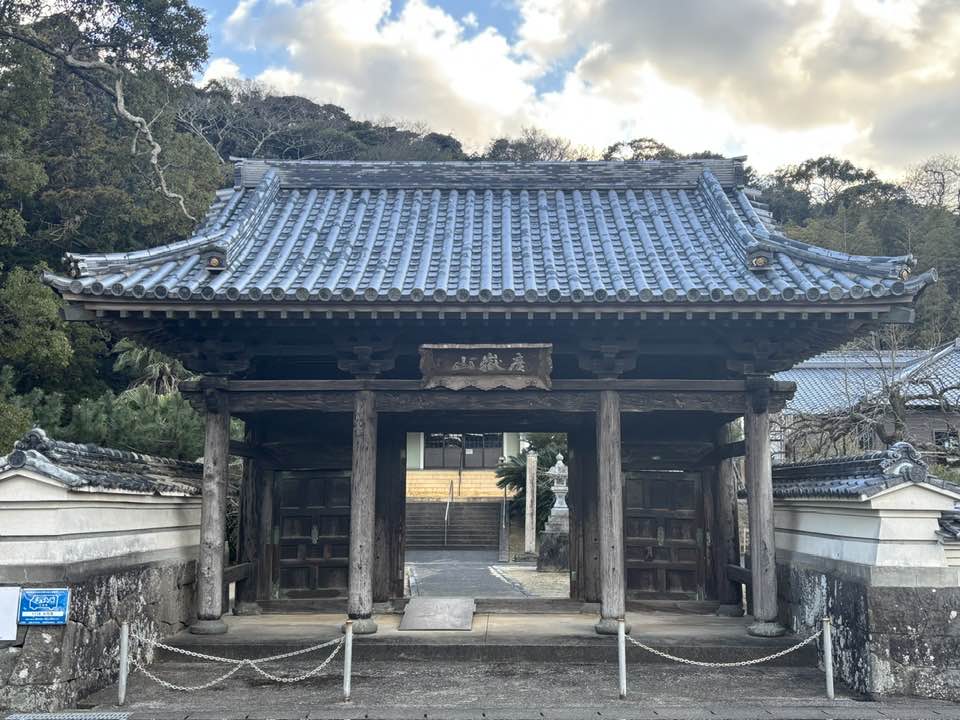
大円寺は五島市三尾野町にある五島における曹洞宗の本山です。それまでの菩提寺は清浄寺でしたが、第17代宇久盛定が大円寺に移しました。第20代当主、宇久純玄から五島氏(ごとうし)を名乗るようになりました。大円寺、五島家、大円寺公園と水神宮の解説文を掲載します。
大円寺
曹洞宗の大円寺は、16世紀から1871年まで五島列島を統治した藩主五島家の菩提寺である。福江の中心部から少し離れた福江川沿いに位置する。1515年、当時の五島藩主・宇久盛定によって大円寺として建立され、後に五島家と改姓した一族が奉安した。五島八十八ヵ所札所巡りの三十番札所である。
五島家の霊廟は二つの区域に分かれており、一つは18世紀の山門と本堂を結ぶ参道沿いの境内内に、もう一つは川を挟んだ対岸の低丘に位置する。後者の区画は規模が大きく、九代にわたる五島藩主の墓所が並ぶ。川岸から石段を登ると、両側に高い石灯籠が立ち並び、墓所内にも多数の灯籠が点在する。これらの灯籠は、1871年の藩制廃止後に境内が大幅に縮小されるまで、何世紀にもわたり大円寺境内を囲んでいたものと考えられる。
墓の規模は、当時の五島藩の重要度や富に応じて異なる。幾つかは中国風の曲線屋根を持つ門を備えており、優雅さと高貴さを象徴すると同時に、五島とアジア大陸との何世紀にもわたる活発な交流を今に伝えている。
Daienji Temple
The Soto Zen temple Daienji is the ancestral temple of the Goto family, which governed the Goto Islands from the sixteenth century until 1871. The temple is located just outside central Fukue, along the Fukue River. It was established as Daienji in 1515 by the daimyo lord of the time, Uku Morisada, whose descendants later adopted the surname Goto. It is the 30th temple on the Goto 88-Temple Pilgrimage.
The Goto family mausoleum consists of two sections, one located within the temple grounds along the path between the eighteenth-century Sanmon Gate and the Main Hall, and the other on a low hill across the river. The latter section, which is larger, contains the tombs of nine generations of Goto lords. It is approached from the riverside by a stone staircase lined with tall stone lanterns, which are also numerous within the mausoleum itself. The lanterns likely stood around the Daienji grounds for centuries, until the precincts were greatly reduced in size following the abolition of the domain system in 1871.
The tombs vary in size according to the prominence and wealth of the Goto domain at the time. Several are fronted by Chinese-style gates with gracefully curved gables, symbols of refinement and nobility that also recall the active exchange between the Goto Islands and mainland Asia over the centuries.
五島家
五島列島は、五島藩主家によって約3世紀にわたり統治された。元来は五島列島最北端の祖地・宇久島に因み「宇久」を姓としていたが、14世紀に福江島へ移住したとされる。15世紀末までに五島列島で最も強大な勢力となり、列島の実質的な支配者としての役割を果たした。
1587年、豊臣秀吉(1537-1598)が九州を平定した際、宇久家は五島統治の正式な認可を得た。1590年代初頭までに秀吉は国内の敵対勢力を全て制圧し日本を統一すると、朝鮮半島を経由した明征服を計画した。秀吉は宇久家を朝鮮出兵に参加させたが、初めて五島氏を名乗のった宇久家当主、純玄(1562–1594)は陣中で病死し、出兵は失敗に終わった。
1603年、徳川家康(1543–1616)が徳川幕府を樹立すると、五島家当主は、新たに設置された福江藩(五島列島の大部分を領有)の大名として正式に認定された。五島家は江戸時代(1603-1867)を通じて五島列島の領主としての地位を維持した。
しかしその大半の期間、他のほとんどの藩主とは異なり、五島家は自前の城を所有していなかった。16世紀に築かれた本拠地・江川城は1614年に焼失し、再建されることはなかった。五島家は徳川幕府に対し、新築城の建設資金援助を繰り返し請願した。その願いが叶ったのは1849年、近海での外国船の目撃が相次いだことで窮地に立たされた幕府が福江の要塞化を決断した時であった。沿岸部の石田城は1863年に完成した。しかしその役割を終えたのはわずか5年後、明治維新によって武士支配と五島家の統治が終焉を迎えた時であった。石田城の大部分はその後解体された。
The Goto Family
The Goto Islands were governed by the Goto warrior family for nearly three centuries. Originally known by the surname Uku after their ancestral home, Uku Island in the northernmost part of the archipelago, the family is thought to have relocated to Fukue Island in the fourteenth century. By the late fifteenth century, they had emerged as the dominant power in the Gotos and acted as the de facto rulers of the island chain.
The Uku received official approval for their governance of Goto in 1587 from Toyotomi Hideyoshi (1537–1598), the warlord who in that year completed his conquest of Kyushu. By the early 1590s, Hideyoshi had defeated all his domestic rivals and unified Japan, after which he planned the conquest of Ming China via the Korean Peninsula. The Uku family was compelled to take part in his invasion. On this occasion, Uku Sumiharu (1562–1594), the head of the family, changed his surname to Goto to indicate the extent of the family’s domain. However, he died of an illness during Hideyoshi’s campaign, which ultimately ended in failure.
In 1603, Tokugawa Ieyasu (1543–1616) established the Tokugawa shogunate and confirmed the head of the Goto family as the daimyo lord of the newly established Fukue domain, encompassing most of the Goto Islands. The Goto retained their position as lords of the archipelago throughout the Edo period (1603–1867).
For most of that time, however, the Goto family, unlike nearly all other daimyo, had no castle of their own. Their ancestral fortress, Egawa Castle, was lost to fire in 1614 and never rebuilt. The Goto petitioned the Tokugawa shogunate repeatedly for permission and funds to construct a new stronghold. Their request was approved only in 1849, after sightings of foreign ships near the islands prompted the embattled shogunate to fortify Fukue. The seaside Ishida Castle was completed in 1863. It lost its purpose only five years later, when the Meiji Restoration brought an end to warrior rule and to the Goto family’s governance. Most of the castle was demolished soon after that.
大円寺公園と水神宮
大円寺に隣接する小さな大円寺公園で福江川を覗き込めば、水上に筏のような土台に立つ一対の銅像を見逃すことはないだろう。そこに描かれた、半人半獣のようなくちばしを持つ生き物は、日本の民間伝承で洪水を引き起こすとされ、特にキュウリを好むという、いたずら好きな水の精霊・河童である。
福江川の河童は、水神を祀る大円寺公園の水神宮と深い関わりがある。地元の伝説によれば、水神宮の河童はかつて、五島藩主の江戸(現在の東京)にあった屋敷を火災から救ったという。
1723年、江戸の屋敷が近隣の建物から延焼した火災で被害を受けた。この災いを繰り返さぬよう、五島藩主は屋敷内に水神宮の分社を建立した。江戸では火災が頻発していたが、次に屋敷を脅かした大火の際、突然屋敷内から消防隊が現れて炎を消し止めた。やがて江戸中に噂が広まった――屋敷を救った英雄たちは江戸の消防隊員ではなく、水神様の使いである河童だったのだと。
Zunauchi at DaihoDaienji Park and Suijingu Shrine
Visible from the small Daienji Park beside Daienji Temple are two bronze figures on a raft-like platform in the middle of the adjacent Fukue River. The seemingly half-human, beaked creatures depicted there are the imaginary kappa, mischievous river sprites that in Japanese folklore are believed to cause floods and to be exceptionally fond of cucumbers.
The kappa in the Fukue River are associated with Suijingu Shrine, a Shinto sanctuary in Daienji Park dedicated to the deity of water. According to local legend, it may have been the kappa of Suijingu Shrine that once saved the Goto family’s grand estate in Edo (today’s Tokyo) from being consumed by fire.
In 1723, the family’s residence in Edo was damaged by a blaze that had spread from a nearby building. To ward off similar disasters—fires were frequent in Edo—the Goto daimyo lord ordered a subsidiary of Suijingu Shrine to be built on the grounds. When another conflagration threatened the Goto residence, firefighters suddenly appeared and extinguished the flames. A rumor quickly spread throughout the capital: the heroes who saved the Goto residence had not been members of Edo’s fire brigade, but kappa doing the bidding of the water deity.