魅力スポット_大寳寺
令和7年度「地域観光資源の多言語解説整備支援事業」に採択されました。
採択された多言語化の内容を掲載します。

大寳寺
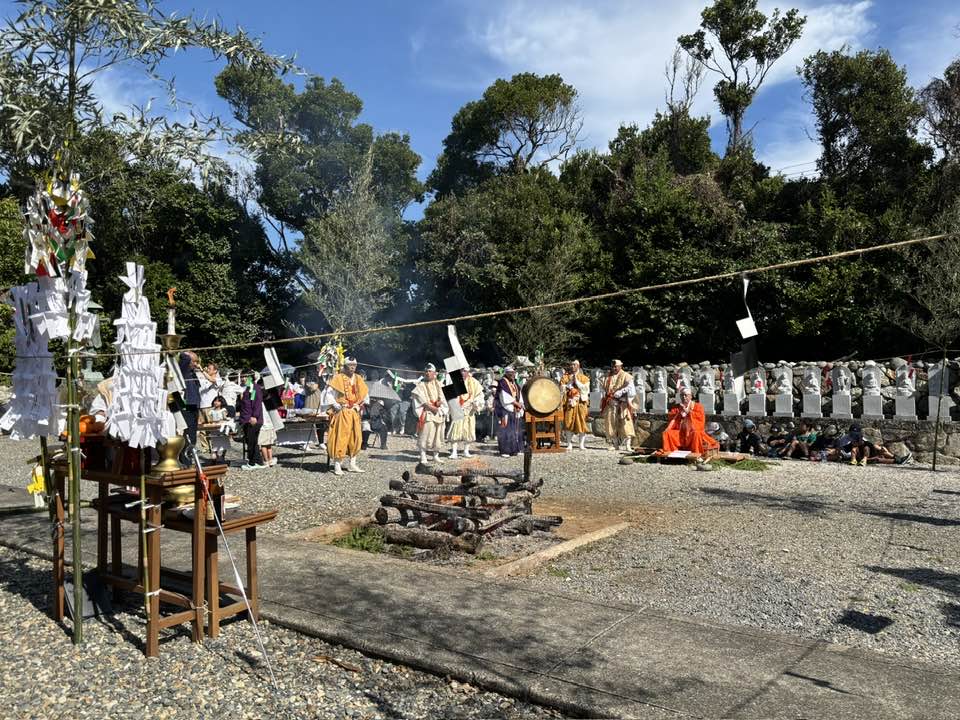
大寳寺は、701年(大宝元年)に三論宗の道融和尚が創建したと言われる五島最古の寺で、806年に、空海が唐から帰国の際に漂着し、三論宗を真言宗に改宗させたと伝えられています。明治の神仏分離政策の影響を受けず、大寳寺の敷地内に言代主神社が鎮座しています。『大寳寺の本堂』、『四国八十八ヶ所巡拝御砂踏処』、『言代主神社の神事である『大宝郷の砂打ち』、『大宝の綱引き』、『福江島の神仏習合』の解説をします。
大寳寺 本堂
福江島の南西端に位置する玉之浦の真言宗大寳寺は、1714年に建立された華麗な本堂で知られる。本堂には本尊である観世音(観音)菩薩像が安置されている。この像は厨子に納められ一般公開されていないが、本堂では複製像と数多くの装飾細部を鑑賞できる。
堂内の壁面には十二支の彫刻が配されている。各動物は十二方位の一つを象徴しており、馬は南、鼠は北、辰は東南東を指すなど、それぞれが方位を示している。さらに動物像は内陣にも見られ、天井四隅には猿の彫刻が施されている。それぞれ表情が微妙に異なり、中国伝統哲学で人間の本質を定義するとされた四つの感情——喜・怒・哀・楽——を表している。これらの彫刻は伝説の左甚五郎の作とされる。左甚五郎は、日本各地の著名な建造物を飾ったとされる芸術家、あるいは芸術家集団である。
祭壇構造の側面には、仏教寺院でよく見られるモチーフである一対の象の頭部が飾られている。象は、仏教が生まれたインドでは陸上における最大の動物として、古来から運搬や戦争時に活躍し、畏敬の対象として仏典にも登場している。仏教寺院では結界に魔物封じとしてあしらわれた。さらに象は歴史上の仏陀の入滅を描いた「涅槃図」においても顕著に描かれている。
祭壇のもう一つの注目点は、観音菩薩と聖母マリアの両方を彷彿とさせる小像である。この小像は、17世紀初頭から1873年までのキリスト教禁止時代に島で生き延びた五島潜伏キリシタンの末裔が、大寳寺への感謝の印として寄進したものとされている。大寳寺を含む寺院は、潜伏キリシタンが当局の疑いを招かないよう観音像に似せた「マリア観音」像を祀りつつ、表向きは仏教徒として登録させることで迫害を回避する手助けをした。
大寳寺の本堂は、五島八十八ヵ所札所巡りの88番目にして最終目的地である。
Daihoji Temple: Main Hall
The Shingon Buddhist Daihoji Temple in Tamanoura on the southwestern edge of Fukue Island is noted for its elaborately decorated Main Hall, completed in 1714. Enshrined within is the temple’s principal object of veneration, a statue of Kanzeon (also known as Kannon), the bodhisattva of compassion. This statue is kept inside a reliquary and is never shown to the public, but a reproduction can be viewed in the hall, which also features a number of ornate details.
Sculptures depicting the 12 signs of the East Asian zodiac are displayed along the interior walls of the hall. Each animal represents one of the 12 directions; the Horse points to the south, the Rat north, the Dragon east-southeast, and so on. More animal imagery can be seen in the altar room, where each of the four corners of the ceiling is adorned with a carving of a monkey. Each one has a slightly different facial expression; as such, the monkeys represent the four emotions that in traditional Chinese philosophy were thought to define human nature: joy, anger, sorrow, and amusement. These carvings are attributed to the legendary Hidari Jingoro, an artist or collective whose work is said to decorate many famous buildings throughout Japan.
The sides of the altar structure are decorated with a pair of sculpted elephant heads, a common motif at Buddhist temples. The elephant is the largest terrestrial animal in India, where Buddhism originated, and has played a vital role in transportation and warfare since ancient times. The animal appears in Buddhist scripture as an object of awe, and its likeness was often incorporated into protective barriers at temples to ward off evil spirits. Elephants also figure prominently in nehanzu paintings that depict the death of the historical Buddha.
Another item of interest on the altar is a small statue that appears to combine the features of the bodhisattva Kannon and the Virgin Mary. The statuette is thought to have been presented to Daihoji as a token of gratitude by descendants of the Hidden Christian community that endured on the Goto Islands during Japan’s prohibition of Christianity from the early seventeenth century until 1873. Some temples, like Daihoji, quietly aided these secret believers by allowing them to register as Buddhists for official purposes while retaining their true faith. The Hidden Christians often worshiped “Maria Kannon” statues, or likenesses of the Virgin Mary designed to be similar enough to Kannon statues to not raise the suspicion of the authorities.
The Daihoji Main Hall is the 88th and final stop on the Goto 88-Temple Pilgrimage.
大寳寺の四国八十八ヶ所巡拝御砂踏処
大寳寺の大師堂では、日本でも最も厳しい巡礼路の一つをわずか数分で巡礼できる機会を提供している。四国八十八ヶ所巡礼は四国に点在する88の寺院を巡る1,200キロの旅だが、このミニチュア版では大師堂を囲む細い回廊を歩くだけで、一箇所で全88ヶ所の寺院に参拝できる。
このミニ巡礼(お砂踏み)は、江戸時代(1603-1867)に始まった伝統の典型的な表現である。当時、四国巡礼者たちは聖地から砂を持ち帰り、島の寺院の加護をより多くの人々に伝えるようになった。彼らは日本各地に巡礼のミニチュア版を築いた。大寳寺の巡礼と同様、こうした巡礼路には通常、実際の巡礼路沿いの寺院の本尊を表す絵や像を祀った小さなお堂が設けられていた。描かれた仏を祀る寺院から持ち帰った砂の袋を、その像の前に埋める。この砂は寺院の聖なる地を表し、巡礼者がその砂を踏むことで、実際の聖域を訪れたのと同じご利益を得られるようにしたのである。
大寳寺と四国八十八ヶ所巡礼は、その開祖である空海(774–835)との関わりで結ばれている。伝説によれば、空海は密教を学んだ中国から帰国した806年、大寳寺を訪れたという。中国で得た教えは後に真言宗の確立へと導き、大寳寺もこの宗派に属している。空海は大師堂に祀られている。
Miniature 88-Temple Pilgrimage at Daihoji Temple
The Daishi Hall at Daihoji Temple offers visitors the chance to travel one of Japan’s most renowned pilgrimage routes in just a few minutes. The Shikoku Pilgrimage is a 1,200-kilometer journey to 88 temples across the island of Shikoku, but this miniature version makes it possible to pray at all 88 sacred sites in one place simply by walking through the narrow corridor encircling the Daishi Hall.
The miniature pilgrimage, known as o-sunafumi, is a typical expression of a tradition that began during the Edo period (1603–1867), when pilgrims returning from Shikoku would bring back sand from the island’s sacred sites to share the blessings of its temples more widely. Tiny versions of the pilgrimage were built in locations throughout Japan. Like the one at Daihoji, these often feature small halls or chapels containing images or statues representing the deities of the temples along the original pilgrimage route. A pouch of sand from the temple that enshrined the depicted deity would be buried in front of the image. This sand represented the sacred ground of the temple, allowing the pilgrim who stepped on it to receive the same blessings as a visitor to the actual sanctuary.
Daihoji and Shikoku are connected by their association with the priest Kukai (774–835), founder of the Shingon school of Buddhism and the legendary originator of the pilgrimage itself. According to tradition, Kukai visited Daihoji in 806 after returning from China, where he had studied esoteric Buddhist teachings. The doctrines he brought back would later form the foundation of the Shingon school to which Daihoji belongs. Today, Kukai is venerated in the temple’s Daishi Hall.
大宝郷の砂打ち
福江島の南西端の大宝郷の海辺の町並みは、毎年秋のある一日だけ砂まみれになる。この場合、地元の浜辺に吹き込む海風が原因ではない。旧暦9月29日(現在は10月下旬から11月中旬にかけて)、灰色の衣をまとった人影が集落を徘徊し、住民に砂を撒き散らす。手や顔に泥を塗り、乱れた藁の頭飾りを被ったその姿は恐ろしく見えるかもしれないが、悪や病を追い払う善なる神々の化身なのである。
この「サンドーラ」(砂鬼)こそが、大宝郷・言代主神社で毎年行われる秋祭りの目玉「砂打ち」の主役だ。祭りは健康と豊作を祈願するもので、前夜遅くに神社で神楽が奉納されると始まり、翌日は行列が町内を巡る。先頭には導きの神・猿田彦を模した参拝者が立ち、その後を囃子(楽団)、長鼻の天狗や獅子に扮した人々、そして言代主神社の神主が続く。最後尾にサンドーラたちも加わり、道行く人々や家屋に向かってだれかれかまわず砂を撒き散らす。子供たちは必死に逃げ回る。行列では、参加者が稲刈りなどの農作業を演じる。大宝郷の砂打ちは数百年前から続く伝統とされ、国選択無形民俗文化財に指定されている。
Zunauchi at Daiho
The streets of the seaside neighborhood of Daiho on the southwestern edge of Fukue Island are peppered with sand on one particular day every autumn. And in this case, the source of the sand is not the ocean winds that often blow in over the local beach. On the 29th day of the ninth month of the traditional lunar calendar (which now falls between late October and mid-November), figures in gray robes roam the village, throwing sand at residents. With mud on their hands and faces and their heads covered with disheveled-looking straw headwear, they may appear intimidating, but they represent benevolent deities believed to drive away evil and disease through the ritual act of tossing sand.
These sandora (“sand demons”) are the central figures of the annual zunauchi, the highlight of the autumn festival at Daiho’s Kotoshironushi Shrine. The festivities, which are held to express wishes for health and an abundant harvest, start late the evening before, when sacred kagura dances are dedicated to the shrine’s deities. The following day, a procession makes its way through the neighborhood. Leading the parade is a parishioner portraying Sarutahiko, the deity of guidance, followed by musicians, performers dressed as long-nosed tengu and shishi (mythical lions), and the priest of Kotoshironushi Shrine. The sandora join in, too, flinging sand at onlookers and houses while children do their best to flee from them. During the parade, participants act out farming tasks such as harvesting crops. The Daiho zunauchi is thought to date back several centuries and has been designated an Intangible Folk Cultural Property.
大宝の綱引き
福江島の南西端の大宝地区の風強い浜辺で、毎年1月11日に壮大な祭事が開催される。男女が対峙するこの綱引きは陰陽の対立を象徴する。男性が勝利すれば陸での豊作が、女性が勝利すれば海での漁師たちの豊漁が約束されるという。つまり、この祭事には敗者がない。
綱引きで使用される縄は全長約40メートル、太さ50センチ。前年に大寳寺で神聖な場所を示す「しめなわ」として使われたものを使用している。1月11日の朝、大宝の住民たちは地元の子供たちが学校近くの田んぼで育てたもち米の藁を使い、古いしめなわを芯にして太さを増す。大寳寺では毎年1月3日に新しいしめなわを受け取っている。
午後、参加者は大寳寺に集まり、住職の御加護を受ける。その後、縄を浜辺まで運び、午後5時から子供からお年寄りまで参加した男女チームが7本勝負で対決する。終了後、参加者も観衆も皆、小豆と焼き餅で作った甘い汁「ぜんざい」を振る舞われる。
Tug-of-War at Daiho
A grand communal tug-of-war takes place on the windswept beach in the Daiho neighborhood on the southwestern edge of Fukue Island every January 11. This contest pits men and women against each other, symbolizing the opposing cosmic forces of yin and yang. A victory for the men is said to promise a good harvest on land, while a triumph by the women promises local fishermen ample catches at sea that year; thus, everyone wins.
The rope being pulled in the tug-of-war is about 40 meters long and 50 centimeters thick. It comes from the nearby Daihoji Temple, where in the previous year it would have been used as a shimenawa, a rope that marks a place as sacred. On the morning of January 11, residents of Daiho use the straw of glutinous rice (mochigome) grown by local children at the paddy by their school to reinforce the old shimenawa and increase its diameter. Daihoji receives a new shimenawa on January 3 every year.
In the afternoon, tug-of-war participants assemble at Daihoji to receive blessings from the resident priest. They then carry the rope down to the beach, where the women’s and men’s teams, composed of residents of all ages, face off in a best-of-seven contest beginning at 5 p.m. When the matches conclude, contestants and onlookers share zenzai, a warm, sweet soup made with adzuki beans and grilled mochi, celebrating the community’s unity and good fortune for the year ahead.
福江島の神仏習合
仏教寺院の敷地内に神社が立つ光景は福江島では珍しくない。神道の鳥居が仏教寺院の入口を示すこともあれば、神道のしめなわが仏堂を飾ることもある。この混交した図像は、千年以上も日本全国で一般的だった宗教観の形態を今に伝えている。
日本に古来から伝わる神道は、風土や自然への畏敬と祖先崇拝を旨とし、森羅万象に宿る八百万の神を祀るという土俗的な信仰から始まった。神仏習合の信仰は、仏教が日本に伝来した後、8世紀に形作られ始めた。仏教の信仰体系は、土着のアニミズム信仰に取って代わるのではなく、神道と融合を遂げた。神社と寺院が一体となった複合施設が出現し、神職と僧侶の両方が宗教儀式を執り行った。宗教学者たちは神道の神々を仏や菩薩の現れと定義したが、一般の人々の多くは両者をほとんど区別しなかった。
この融合的な信仰形態は、明治政府が1868年に神仏分離を命じるまで続けられた。全国で仏教建築物、仏像、美術品が神社から撤去され、神社は純粋な神道施設となった。しかし福江島では、政府の布告による影響は比較的限定的であった。その理由が島の離れた位置、地域の政治情勢、偶然、あるいはこれら三つの複合要因によるものかは不明である。いずれにせよ、福江の神社と寺院は今なお、神仏が不可分であった時代の目に見える証として残している。
Shinto-Buddhist Combination and Fukue Island
A Shinto shrine on the grounds of a Buddhist temple is a common sight on Fukue Island, where Shinto torii gates often mark the entrances to Buddhist sites of worship and Shinto shimenawa ropes decorate Buddhist temple halls. This hybrid iconography harks back to a religious understanding that prevailed across Japan for more than a thousand years.
In ancient Japan, religious practice centered on reverence for the land, nature, and the spirits of the ancestors, and belief in the presence of the divine in all things—a worldview that was later defined as Shinto. The combination of Shinto and Buddhist practices (shinbutsu shugo) began to take shape in the eighth century after the introduction of Buddhism to Japan. Rather than supplanting the native animism, Buddhist teachings became fused with it. Shrine-temple complexes emerged, with religious rites conducted by both Shinto priests and Buddhist monks. Religious scholars interpreted Shinto deities as manifestations of Buddhas and bodhisattvas, whereas ordinary people made little distinction between the two.
The combinatory form of worship was widespread until 1868, when the Meiji government ordered the formal separation of Shinto and Buddhism. Across the country, Buddhist structures, statues, and artworks were removed from shrines, which were redefined as exclusively Shinto institutions. On Fukue Island, however, the impact of the government’s decree was comparatively limited. Whether this was due to the island’s remote location, the local political climate, or mere coincidence—or a combination of all three—remains unclear. Whatever the reason, the shrines and temples of Fukue stand today as visible reminders of a time when Shinto and Buddhism were inextricably intertwined.